Identity Disclosure
in Service Chatbots
Trust · Customer Retention · UX Design
Why Identity Disclosure Matters
Problem · Research question · Relevance
What role does disclosing a chatbot's non-human identity play in trust and customer retention?
- Service chats: users increasingly interact with chatbots instead of humans
- Trust and positive experiences are essential for churn prevention
- AI hospitality market projected to reach $3.2B by 2025
- Transparency about machine identity becomes a key UX design factor
Theoretical Background
Trust as a driver of customer retention
Methodological Approach
Online vignette study · n = 37 · randomized order
Prior work: disclosed vs. concealed AI — we split disclosure to test how explicit it should be.


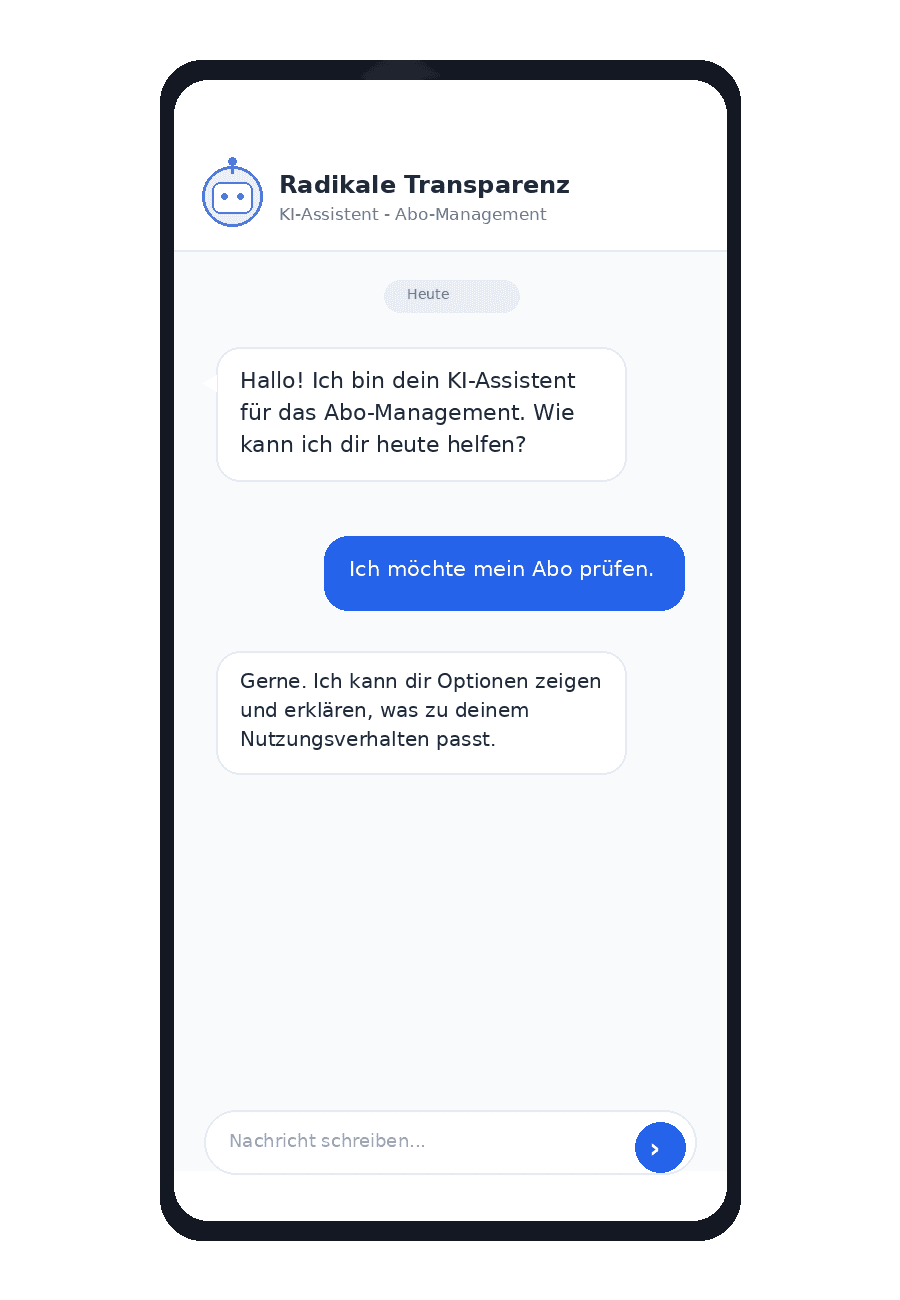
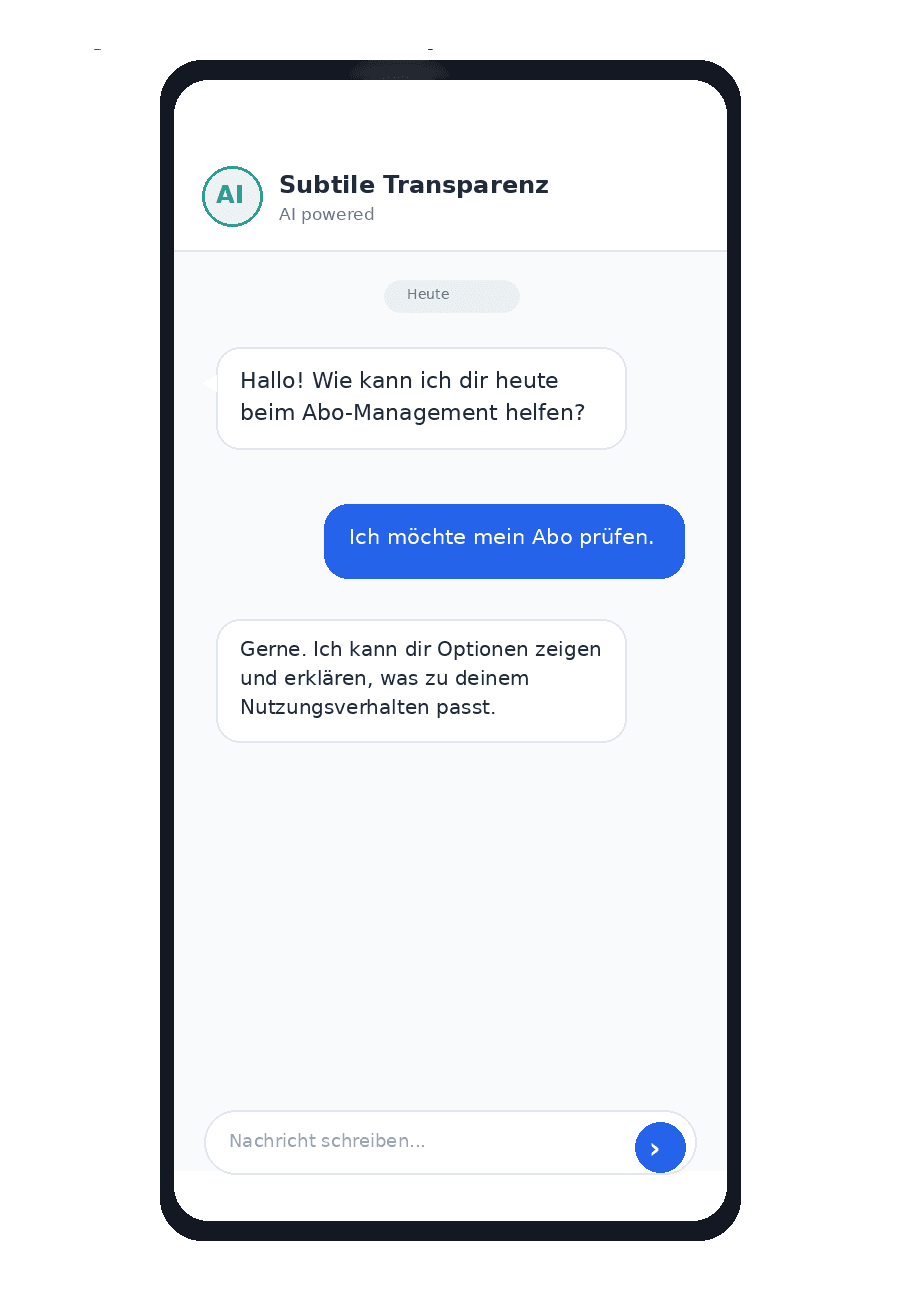
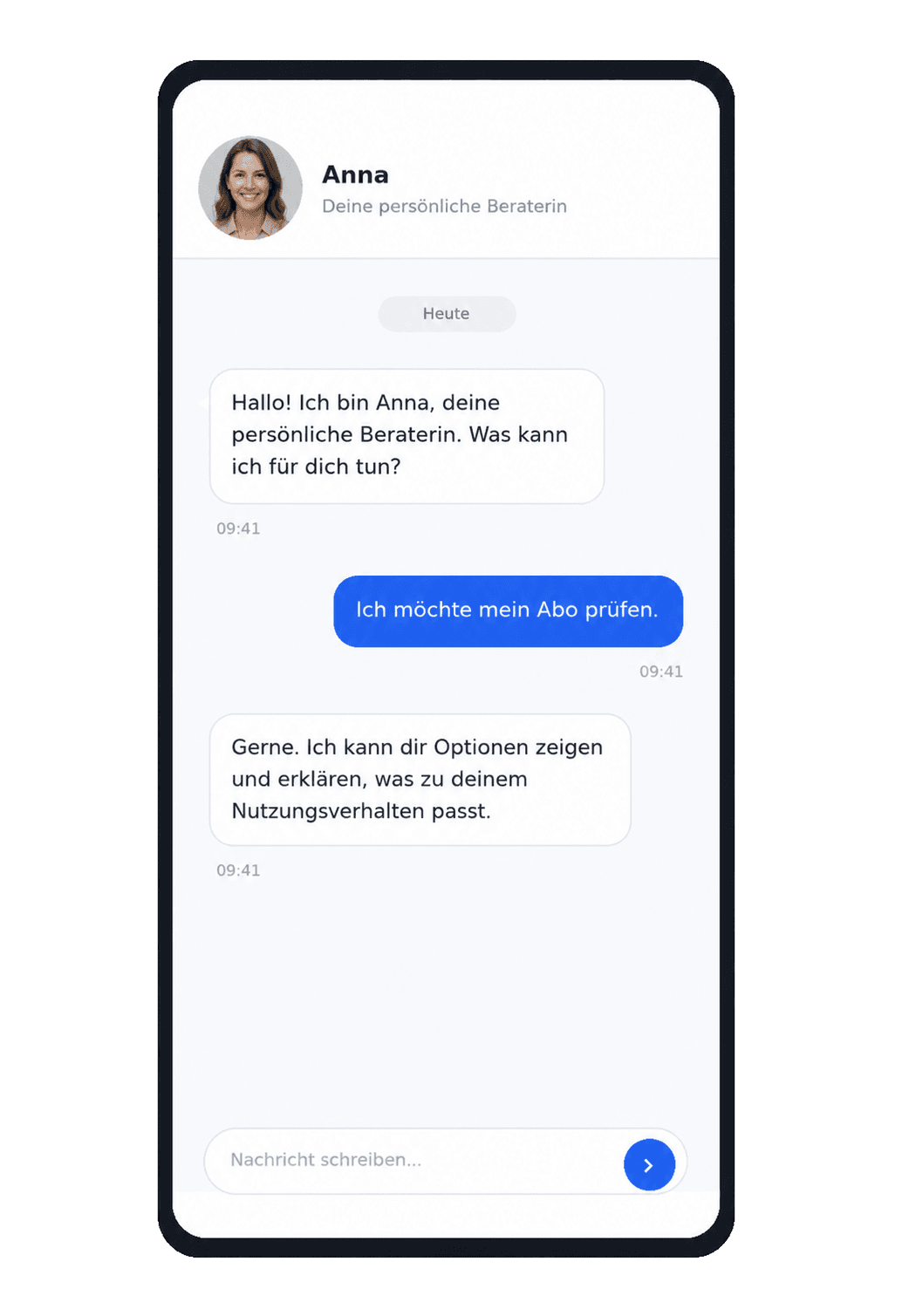
Design derived from Funke et al. (2023): three disclosure levels operationalize open, subtle, and concealed AI · Measures: trust, fairness, retention, cancellation fairness, empathy, comfort (7-point Likert)
Results
Effects vary by dimension
Online vignette study · n = 37 · randomized within-subjects order · paired t-tests · 7-point Likert scales
Paired t-tests
n = 35 complete casesSignificant: Empathy · A vs C · t(34) = −2.50 · p = .017*
Not significant (p > .05): Trust (A·B p = .834 · A·C p = .117 · B·C p = .208) · Retention (all n.s.) · Comfort (all n.s.) · Empathy A·B p = .285 · Empathy B·C p = .098 · exploratory · no Bonferroni correction
Discussion
Descriptive patterns · paired t-test interpretation
A — Radical
Comfort highest (4.1). Empathy significantly lower than C (p = .017*) — clearest t-test effect involving A. Open AI identity feels honest but less warm.
B — Subtle
Descriptive trust leader (4.2), but no significant difference vs. A (p = .834) or C (p = .208). Minimal “AI powered” cue — promising, not statistically proven.
C — Disguise
Significantly highest empathy vs. A (p = .017*). Lowest trust & comfort descriptively — not significant in t-tests. Concealment may boost warmth but not verified on retention.
Limitations
Student sample (n = 37; t-tests n = 35) · hypothetical vignettes · 12 pairwise tests without correction · small n limits power · no service-outcome manipulation
Conclusion & Outlook
Recommendations
- Match disclosure style to the primary UX goal — descriptive patterns differ by dimension
- Do not fully conceal AI — C shows lowest trust and comfort
- Use B when trust drives retention; use A for clarity — but only empathy A vs. C was statistically significant
- Report inferential stats cautiously: small n, exploratory design
Outlook
Larger samples, Bonferroni or ANOVA follow-ups, real cancellation flows, and Funke-style service-outcome interactions.
Thank you!